Aluminium-Wire Induction Motors in HVAC Fans: Where They Fit and Where They Don't
Aluminium windings cut conductor cost in HVAC fan motors, but the trade shows up at the joint and the thermal protector. Where the technology fits, and where copper still wins.
On this page
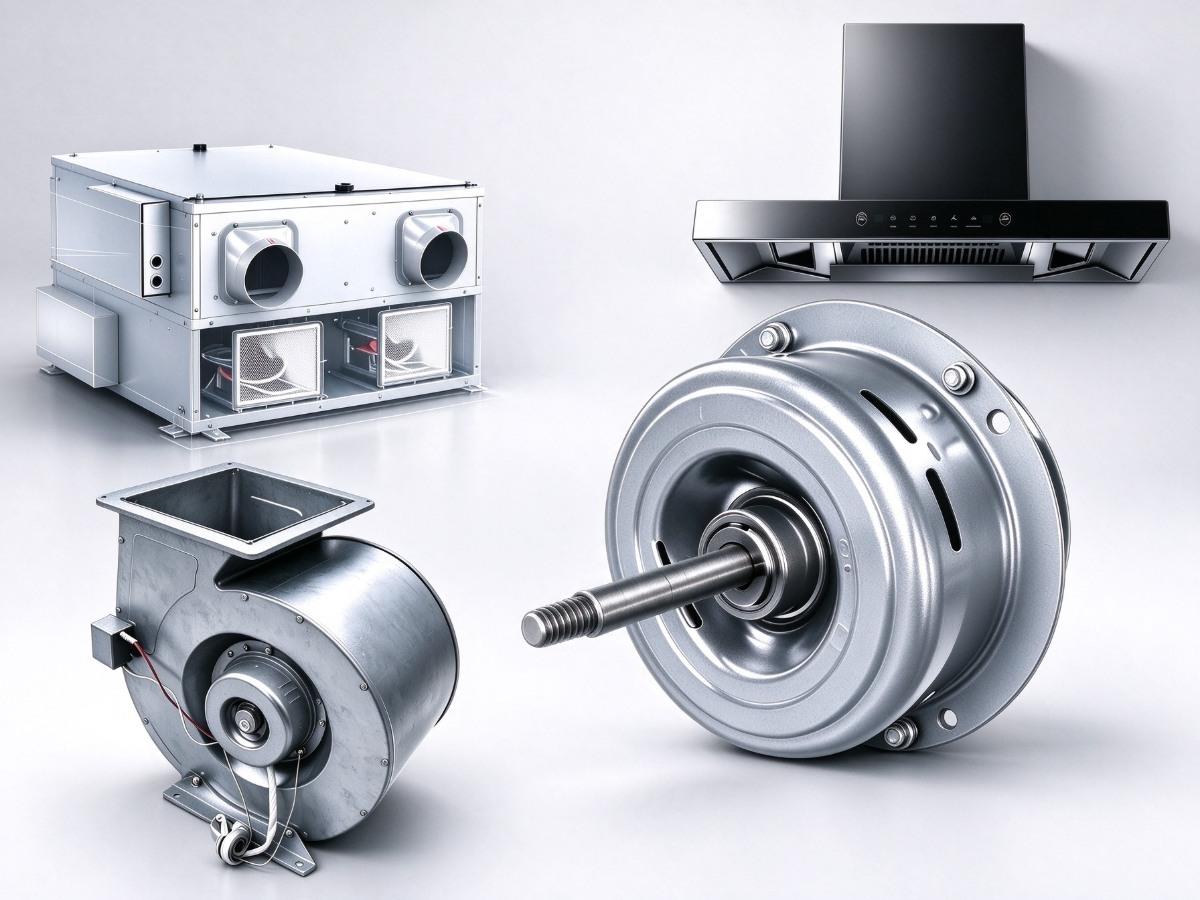
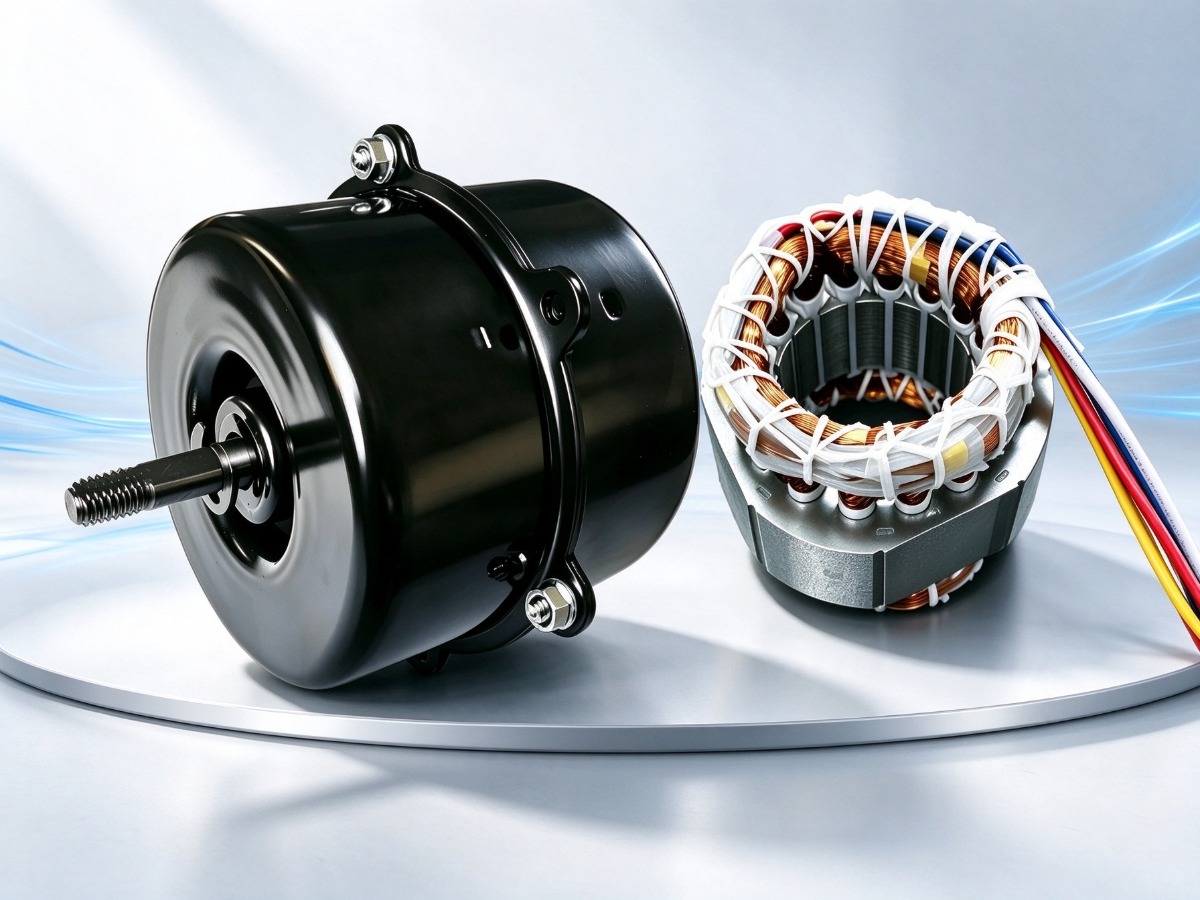
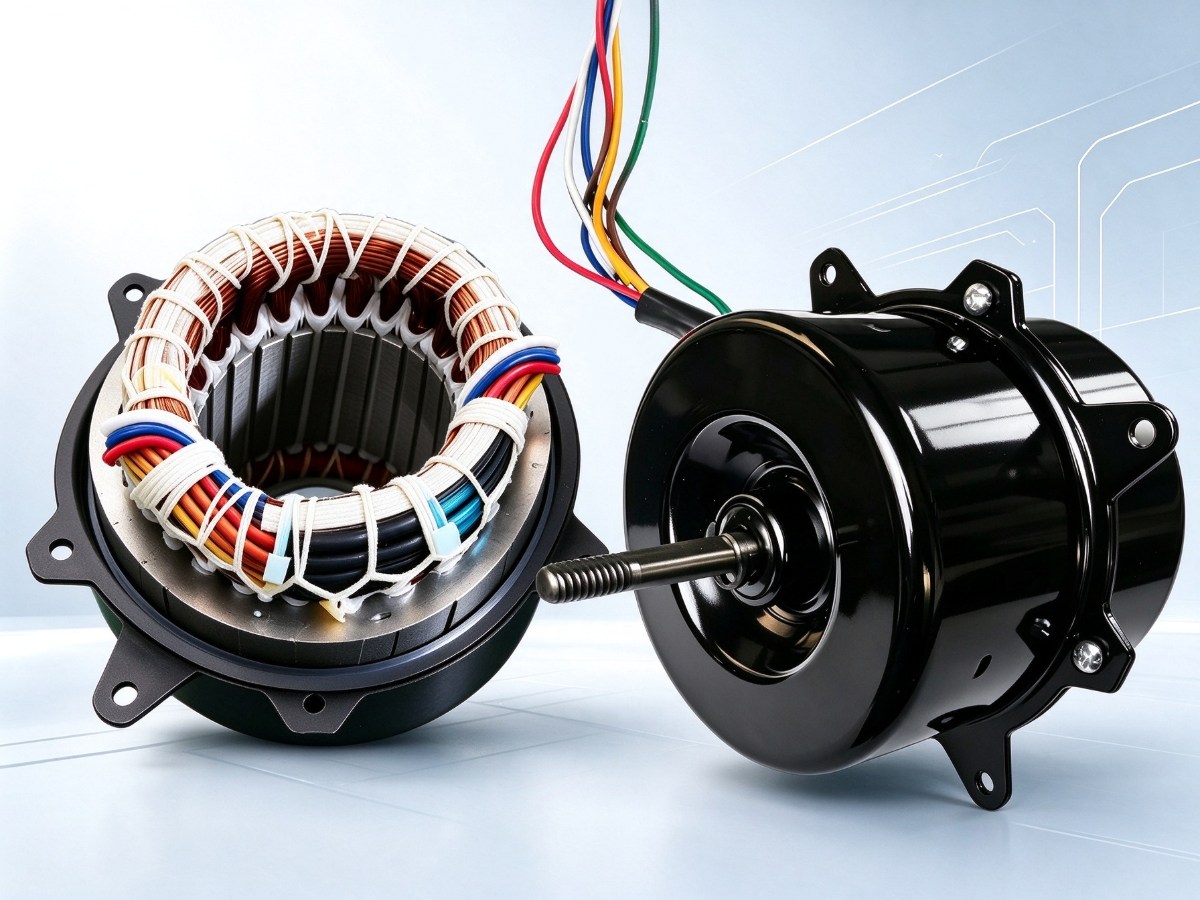
An aluminium-wire induction motor uses aluminium instead of copper for the stator winding, with a high-temperature insulation system built around it. In HVAC fans the choice is driven less by first cost than by duty: hot airstreams, long run times and price pressure on the blower assembly. The technology is mature, with aluminium windings proven in the field for more than ten years, but it is not a drop-in substitute for copper in every application. The RH9437 is a 180 W four-pole example.
Why aluminium windings exist in HVAC fan motors
Aluminium conducts less well than copper, so a designer who wants the same resistance uses a larger conductor cross-section. That costs slot area, which is why an aluminium stator is not a cheaper copy of a copper one: lamination, slot geometry and winding pattern are designed together. What the material buys is lower conductor cost, a lighter stator and a supply chain less exposed to copper price swings. At volume, a few percent of BOM is the margin.
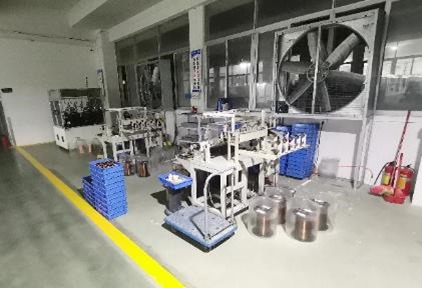
- High-temperature aluminium wire, wound on the same automatic machines as copper.
- Class F insulation system matched to the wire enamel and the varnish cycle.
- Integrated thermal protector that cuts the circuit before the winding is damaged.
- Silicon-steel core sized for the larger conductor cross-section.
Aluminium versus copper: six differences
| Criterion | Aluminium winding | Copper winding |
|---|---|---|
| Conductor gauge | Larger cross-section for the same resistance | Smaller cross-section for the same resistance |
| Cost and supply | Lower conductor cost, steadier metal price | Higher conductor cost, more volatile |
| Hot-air duty | High-temperature wire plus class F system is the standard build | Class F system with more thermal headroom at the same rating |
| Terminations | Welded or crimped joints, inspected and audited | Conventional soldered or crimped joints |
| Mass | Lighter stator at equal slot fill | Heavier stator at equal output |
| Field repair | Replaced rather than rewound | Local rewinding still common in some markets |
The material runs across the range: the RH8226 family at 50–80 W uses a high-temperature aluminium-wire stator on a silicon-steel core, and the 120 mm RH12040 uses the same approach for range hood duty up to 400 W. This is not a scoreboard. A copper motor with a poor insulation system fails sooner than a well-built aluminium one, and the reverse holds too. What matters is whether the supplier controls winding tension, joint quality and varnish cure, because those three process steps decide the life of either version.
Failure modes and duty limits
Aluminium windings fail in the same places as copper ones, but the margins differ. The conductor runs hotter for the same current, so the insulation system and the protector carry more of the reliability burden. Field failures cluster around four items:
- Open circuit at a joint where the aluminium wire meets the lead, usually a poor weld or corrosion.
- Winding burnout after a blocked impeller, when the protector is undersized or bypassed.
- Bearing seizure after long duty in a hot airstream, which is a lubrication problem, not a winding one.
- Insulation breakdown where oil mist or condensation reaches the winding.
Aluminium is a cost decision that becomes a reliability decision at the joint and at the protector, so those are the two places to audit.
When to move to BLDC
BLDC becomes the better answer when the appliance needs variable speed, a defined efficiency target, or a noise class below what an induction motor reaches at the same airflow. A 30 dB(A) motor against a 40 dB(A) induction unit changes what the fan can be sold as. It also wins when the control board already exists and only the motor is under review. The trade is a driver, a different failure profile and a higher unit cost, and the integrated versus external driver question follows immediately.
Quality checks buyers should request
- Winding resistance and insulation resistance per batch, with records.
- Dielectric withstand test at the specified voltage for one minute.
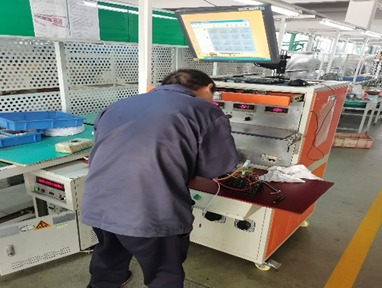
- Thermal protector trip and reset check on a sample from each lot.
- Varnish coverage checked on a cut-up stator, not only by eye.
- Noise and vibration check at rated speed against the declared dB(A) class.
Frequently asked questions
Is an aluminium-wire motor less reliable than copper?
Not by material alone. Life is set by the insulation system, the joint between winding and lead, and the thermal protector. A class F motor with a proven joint process and a correctly rated protector meets the same duty as a copper unit of the same class. A poor joint fails regardless of conductor material.
Which applications should stay on copper?
Very humid or salt-laden air, frequent start-stop duty with high inrush, and any application where the motor is rewound locally instead of replaced. There the joint corrosion risk and the repair route both favour copper, and the cost gap is small against the service cost.
Can the motor be customised to a different fan?
Yes. Shaft diameter, flange pattern and lead length are the usual variables, and the RH9437 is offered with ø8 or ø10 shafts and custom flanges. Voltage and frequency options cover 110 V/60 Hz and 230 V/50 Hz builds. Send the fan curve and mounting drawing through the contact page so the match can be checked.
Need a motor matched to your appliance?
Send your voltage, speed, shaft and mounting requirements. Our engineering team replies with a proposal, drawing and sample plan.
Request a quote