Fan Motor Noise and Vibration: Six Root Causes and How to Isolate Them
A noise complaint arrives as one symptom but usually has several possible causes. A fixed isolation order separates bearing, balance, commutation, resonance, mounting and airflow.
On this page
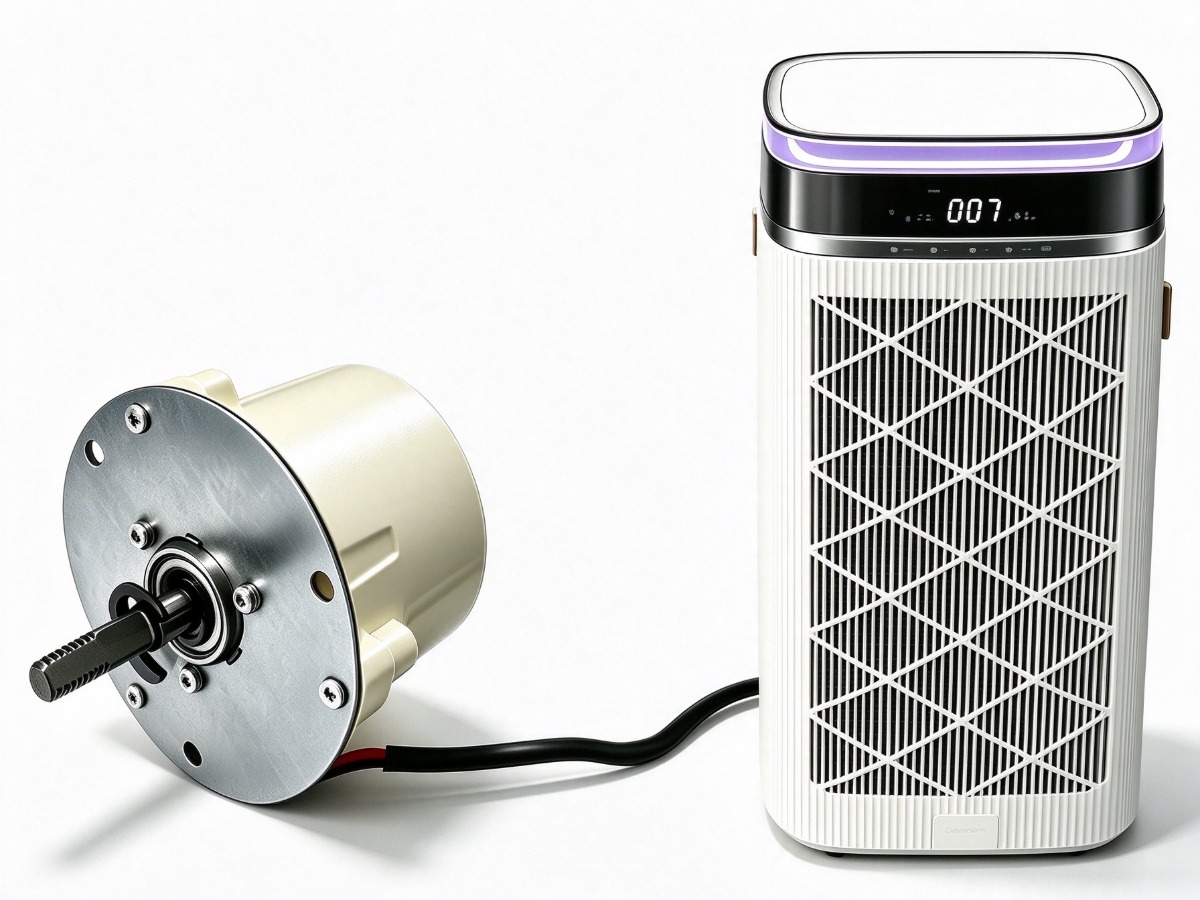
Noise and vibration complaints arrive as one symptom and usually have more than one possible cause. A fan that hums at 100 Hz, a motor that growls at speed and a housing that buzzes at one airflow can all be called loud, yet each points to a different part of the assembly. Working through them in a fixed order is faster than swapping motors. For reference, the BLDC range is specified at 30 dB(A) or below and the induction range at 40 dB(A) or below. Motors specified in the 30 dB(A) class, such as the BLDC-RH4214, leave more headroom before the housing becomes the dominant source.
Start with the noise class you are designing to
A noise target means nothing without a test condition: microphone distance, background level, mounting, and whether the fan runs on free air or in a duct. A 30 dB(A) BLDC motor measured on a quiet bench can read 40 dB(A) once it sits inside a sheet-metal hood. Before chasing a cause, confirm the measurement matches the specification condition, then decide whether the problem is the motor, the installation or the test itself.
Six root causes
| Symptom | Likely cause | Action |
|---|---|---|
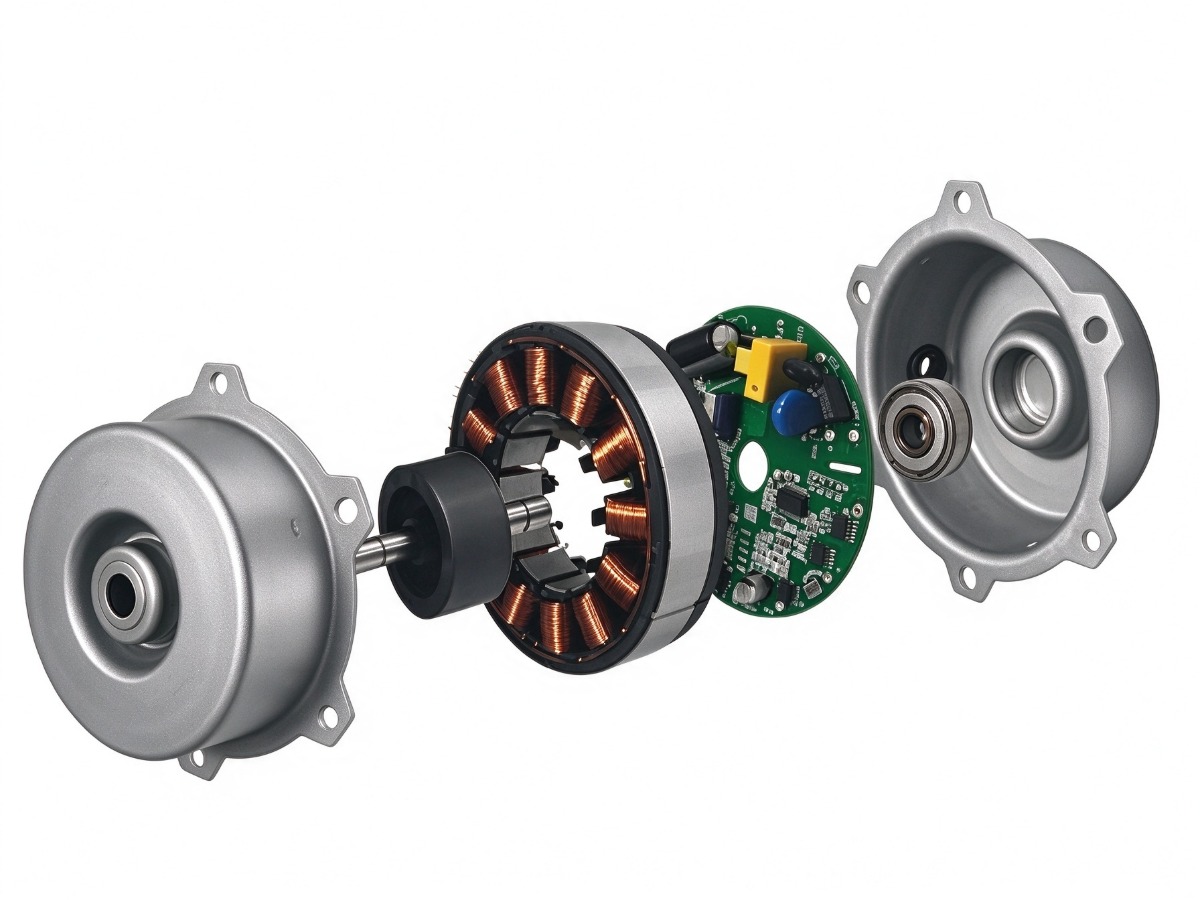
| Steady tone that tracks speed | Bearing damage or lost preload | Check radial play and race condition; replace the bearing. |
| Low-frequency rumble at running speed | Rotor unbalance | Balance the rotor, then the complete impeller assembly. |
| Whine above running frequency | Commutation or PWM carrier | Change switching frequency or commutation angle; check the driver setting. |
| Buzz at one speed only | Structural resonance | Identify the mode, then stiffen or damp the bracket or panel. |
| Rattle that changes with handling | Mounting looseness or worn isolators | Check fastener torque and isolator compression. |
| Whoosh or beat that follows airflow | Impeller and duct interaction | Check impeller clearance, inlet shroud and duct transitions. |
Isolation procedure
Run the steps in order and change one variable per run. A motor that passes on the bench and fails in the housing is telling you the problem is in the installation.
- Measure the assembled appliance at the specified condition; record dB(A) and the dominant frequency.
- Remove the impeller and run the bare motor; if the tone persists, the motor is the source.
- Check bearing play by hand and listen at low speed; a damaged bearing is audible below running speed.
- Sweep the speed range and note every speed where noise peaks.
- Mount the motor on a rigid block, then on isolators, and compare the readings.
- Refit the impeller and check balance and clearance to the shroud.
- Wrap the housing temporarily to test for radiated noise from panels.
- Repeat the measurement in the final installation, in a duct, before sign-off.
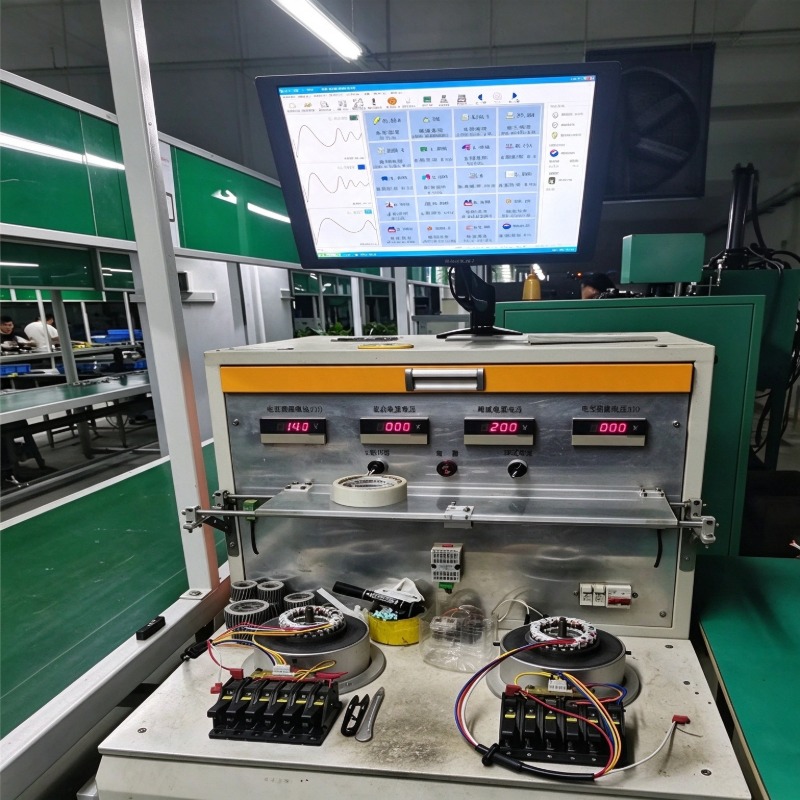
Change one variable per run: a noise chart with two causes mixed together cannot tell you which fix worked.
What the test bench adds
A performance bench records speed, input power and noise across a sweep, so a peak at one speed can be tied to a commutation band or a resonance instead of being described as loud. Temperature and humidity chambers then expose insulation and lubrication problems that appear only after hours of running. A vibration check on the same bench catches bearing damage before it becomes a field complaint. The hood selection guide covers how heat and grease shift the noise profile over a season.
Design rules that prevent a repeat
- Specify the noise class together with the test condition, and keep both on the drawing.
- Balance the impeller as an assembly, not only the bare rotor.
- Pick a switching frequency that does not excite the bracket or a housing panel.
- Size isolators for the assembly mass; over-compressed rubber transmits more than it absorbs.
- Keep clearance between impeller and inlet shroud, and re-check it after the first production run.
Frequently asked questions
Is a quieter motor always the answer to a noise complaint?
No. If the housing resonates at running speed, a quieter motor does not remove the buzz. Measure the assembled unit first, and change the motor only once it is shown to be the dominant source.
How do I separate bearing noise from electromagnetic noise?
Bearing noise continues while the motor coasts down with power removed, and it tends to be broadband with a tone at the ball pass frequency. Electromagnetic noise stops with the drive and shifts when the switching frequency changes.
What should be recorded for a noise complaint?
The measurement condition, the dB(A) reading, the dominant frequency, the speed, and whether the unit ran on free air or in a duct. Without those, a comparison to a 30 dB(A) or 40 dB(A) specification is not meaningful. Test methods are summarised on the about page.
Need a motor matched to your appliance?
Send your voltage, speed, shaft and mounting requirements. Our engineering team replies with a proposal, drawing and sample plan.
Request a quote