Range Hood Motor Selection: Heat, Grease and 120 mm Stator Platforms
Kitchen air is hot, greasy and constant, and that changes how a fan motor should be specified. A practical guide to the 120 mm stator platform and blower matching.
On this page
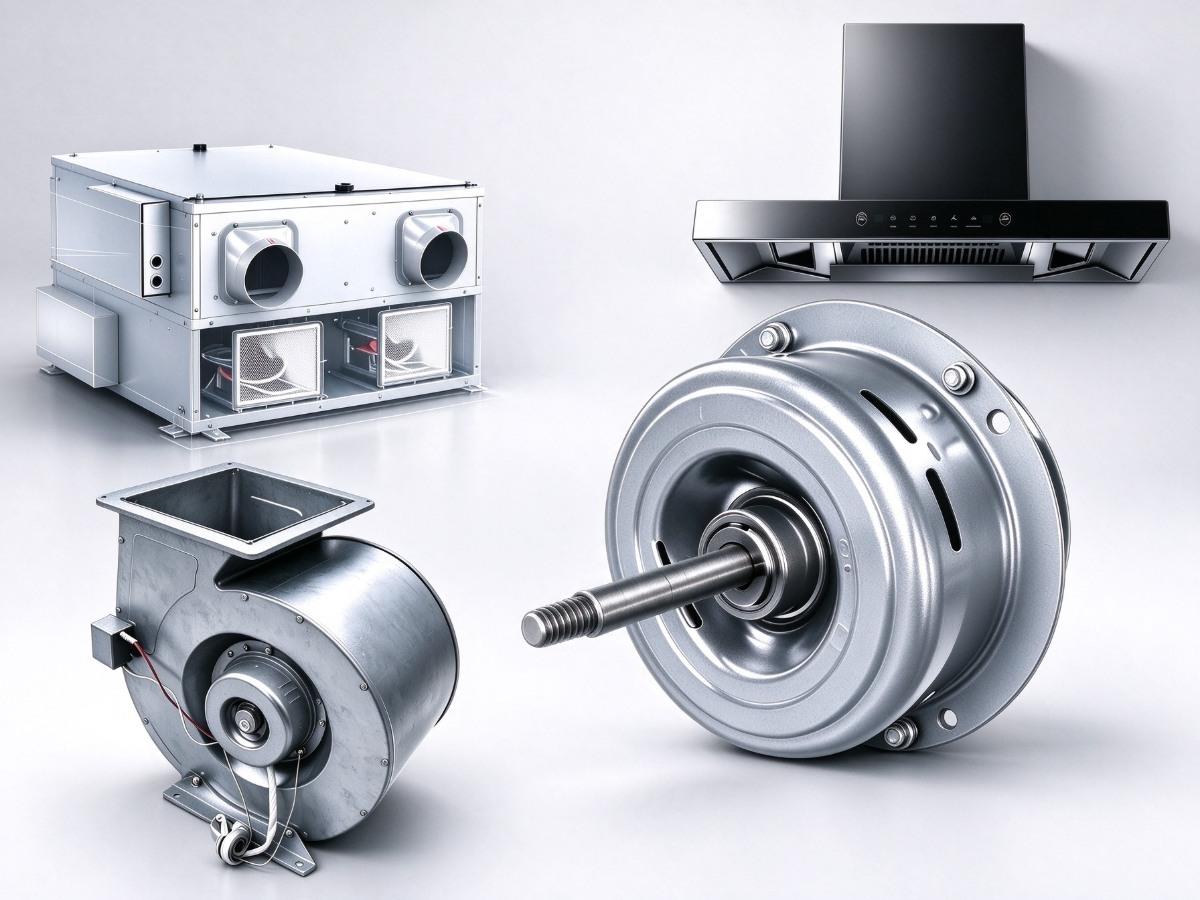
A range hood motor runs in the worst air in the house: hot, greasy and constant. Selection therefore starts with the duty rather than the airflow, because a motor that survives a bathroom extract for a decade can fail in a kitchen in two seasons. The 120 mm stator capacitor platform is the usual answer for domestic hoods and fresh-air units in the 150–400 W class, and the RH12040 sits at the top of that family.
What the kitchen does to a motor
Two conditions dominate. The first is temperature: air drawn through a hood can sit at 60–80 °C, and the motor is cooled by the same hot stream it is moving. The second is oil mist, which condenses on the impeller, the motor body and any exposed winding. A greasy impeller gains mass, loses balance and loads the bearing; a greasy motor body loses its ability to shed heat. Both effects are gradual, which is why a kitchen motor should be specified for its end-of-life condition rather than its first-week performance.
- Air path at 60–80 °C, with the motor in the hot stream rather than beside it.
- Oil mist that coats the impeller and the motor body over months.
- Long unattended runs, usually at one fixed speed.
- Condensation when a hood sits idle in a cold kitchen after cooking.
The 120 mm stator platform
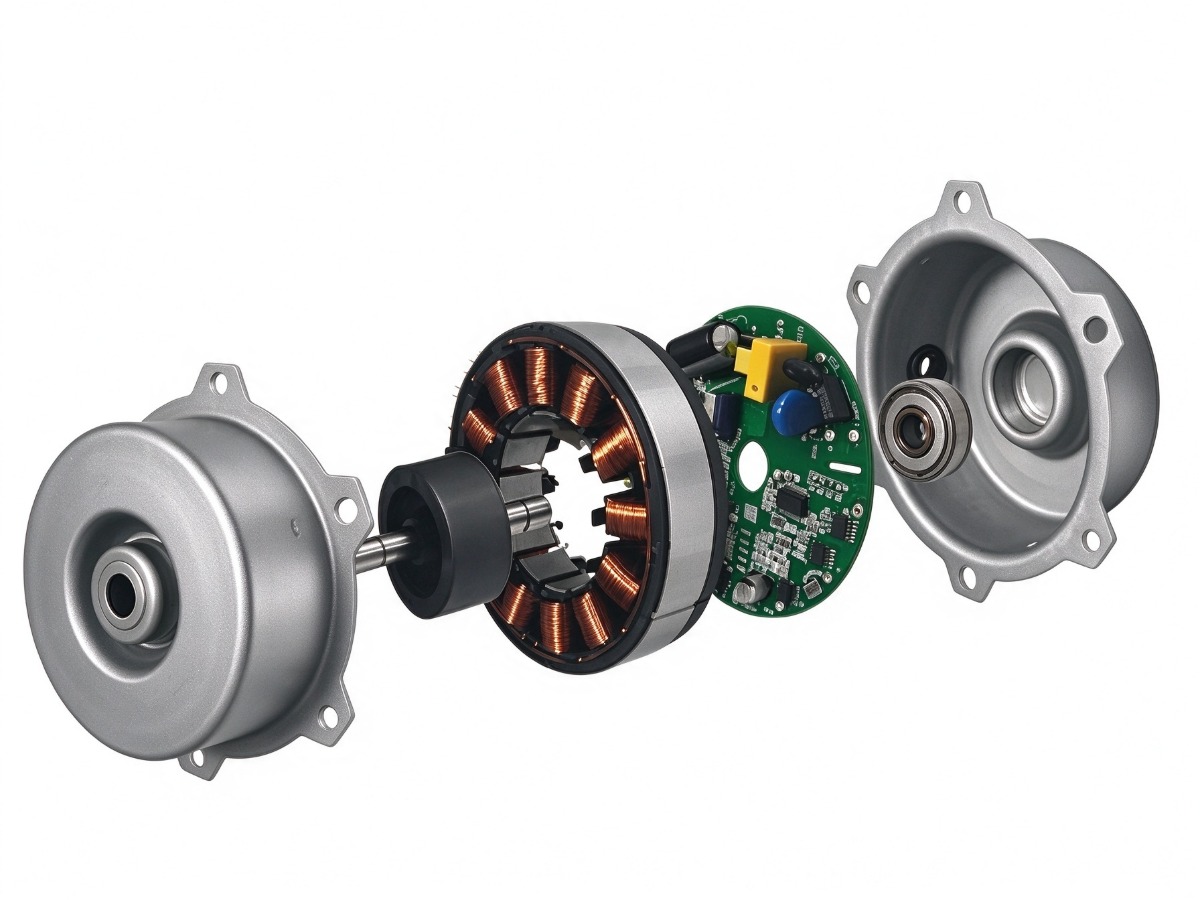
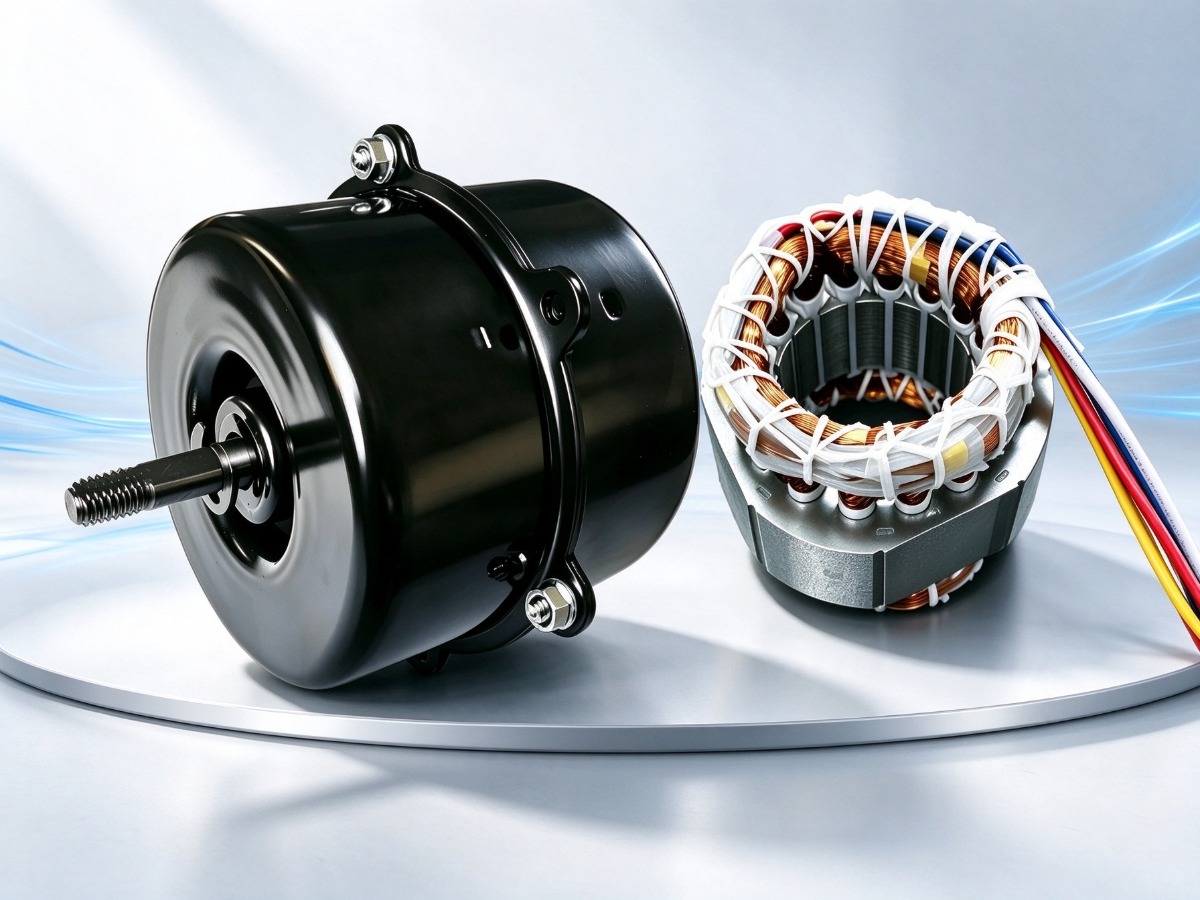
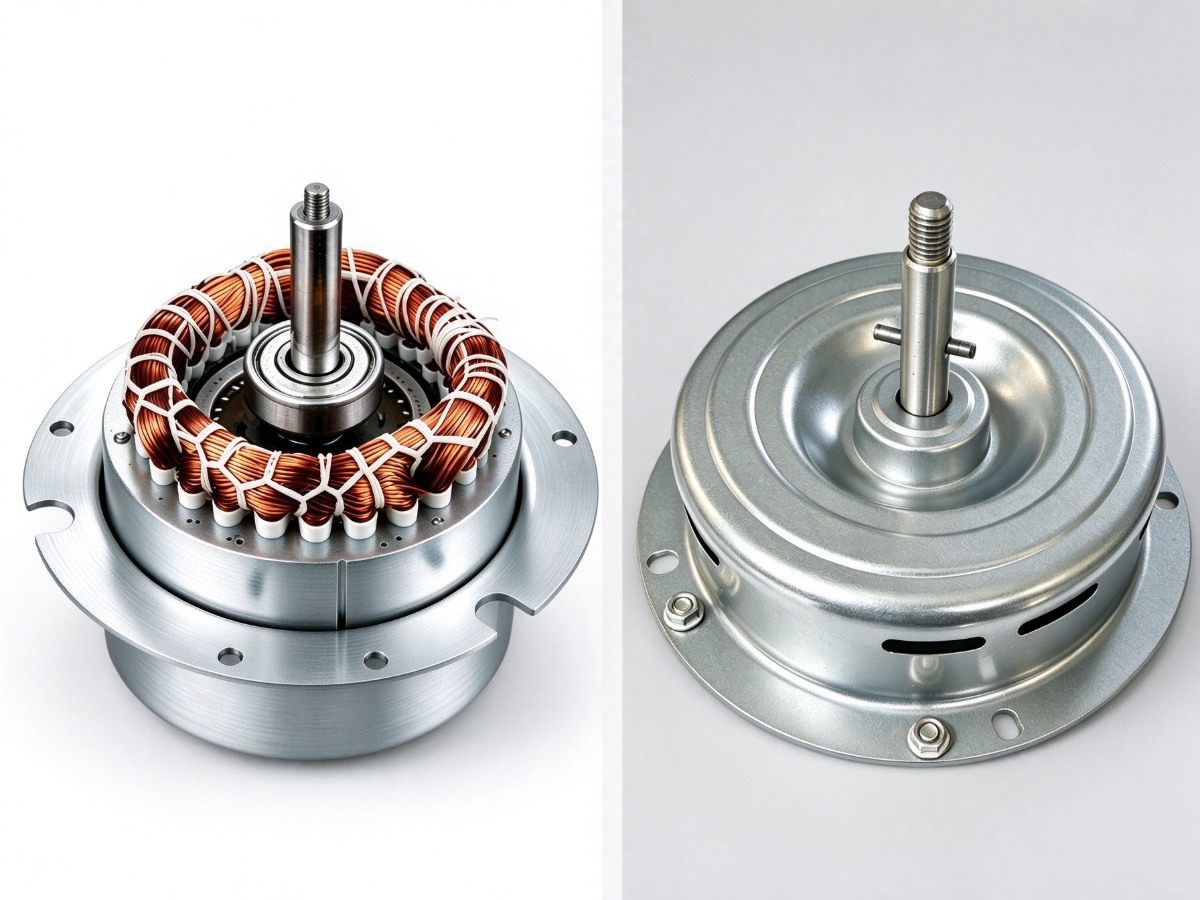
A 120 mm stator gives enough slot area for the 150–400 W class without a long axial stack, which keeps the blower housing compact. The family is built on high-temperature aluminium wire, class F insulation, IP54 protection and a dust- and oil-proof structure, with a ø12 shaft and 1400 rpm at four poles. Noise is held to 40 dB(A) or below across the range.
| Model | Rated power | Stator | Speed |
|---|---|---|---|
| RH12024 | 200 W | 120 mm | 1400 rpm |
| RH12030 | 280 W | 120 mm | 1400 rpm |
| RH12037 | 350 W | 120 mm | 1400 rpm |
| RH12040 | 400 W | 120 mm | 1400 rpm |
The same logic appears on the RH9050P pump motor: 2-pole, 180 W, 2800 rpm, with a pure copper enamelled winding for hot and corrosive duty. Different platform, same priority, with the insulation system chosen for the environment first.
Matching a centrifugal blower
Hood performance is set by static pressure, not free air. A centrifugal blower with a narrow scroll and a long duct needs pressure at the operating point, and a motor chosen for high free-air flow will sit far from its design point once installed. Ask for the fan curve and plot the rated speed against it: the intersection is where the motor will run, and it should sit near the efficient part of the impeller curve, not at the far right.
Impeller diameter then decides the frame. A larger impeller at lower speed moves the same air more quietly; a smaller one at higher speed is cheaper and noisier. With the platform fixed at 1400 rpm, the impeller sets the duty point.
Oil-proof construction, shaft options and noise
Grease resistance is a construction detail, not a coating. Shaft seals or a labyrinth feature, a housing without upward-facing openings, and a varnish system that binds the winding all matter more than a painted surface. Mounting is usually a flange or a cradle matched to the blower; shaft diameter, length, flat or keyway, and lead length are the variables to fix early, because they change the tooling.
Noise follows the impeller and the mounting as much as the motor. A 40 dB(A) motor on a rigid bracket can sound worse than the same motor on rubber isolators with a balanced impeller. Where a hood needs a lower noise class than the induction platform reaches, BLDC is the route: a 30 dB(A) BLDC unit at the same airflow changes the product's market position, at the cost of a driver and a different service model. The noise diagnosis guide covers the mechanical side.
Specify a hood motor for the air it will see in year three, not the air on the test bench in week one.
Selection checklist
- Confirm the duty point: airflow and static pressure at the installed duct length.
- Measure air temperature at the motor position, not at the hood inlet.
- Choose the family member by power at that duty point, not by hood width.
- Fix shaft diameter, length and flat or keyway before tooling.
- Confirm the flange or cradle pattern against the blower drawing.
- Check lead exit direction and length against the wiring route.
- Agree the noise class and the test condition used to verify it.
- Decide the service route: motor replacement or blower assembly replacement.
Frequently asked questions
Why does a hood motor fail sooner than a bathroom fan motor?
Heat and grease together. The motor is cooled by 60–80 °C air instead of room air, and oil mist reduces its ability to shed heat while adding mass to the impeller. Both raise winding temperature and bearing load over time, and neither shows up on a short test run.
Is a bigger stator always better for a hood?
No. The platform covers 150–400 W, and choosing the largest member for a small hood wastes space and moves the motor away from its efficient operating point. Match the model to the measured duty point instead of to the hood's nominal width.
Can the same motor be used in a fresh-air system?
Yes. The platform covers fresh-air units as well as hoods, and that duty is gentler because the air is filtered and cooler. Confirm duct pressure and mounting pattern first. Ratings are listed on the product pages.
Need a motor matched to your appliance?
Send your voltage, speed, shaft and mounting requirements. Our engineering team replies with a proposal, drawing and sample plan.
Request a quote